 Royal School


Literacy at Royal School
This was given as the Principal’s Report to RSPC – November 2026
Manitoba Education Mandate: Under The Public Schools Act and the newly revised Manitoba Provincial Report Card Policy (2026), all school divisions are required to assess early reading skills twice a year for students in grades 1 through 3. Updated provincial report cards include a new section showing whether your child has "Met" or "Not Yet Met" provincial reading benchmarks. This helps teachers spot reading needs early and give the right support right away. Families of gr.1-3 will see results on the newly revised Report Card in terms 1 and 2. Families of gr.4-5 will see the screener section on the report, with N/A (Not Applicable) selected. (Kindergarten students only receive one report card at the end of the school year.)
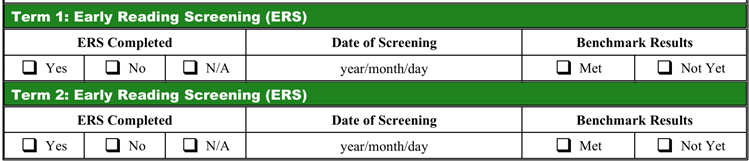
Manitoba Education allows divisions to select from a list of standardized, evidence-based early reading screening tools that meet ministerial criteria. Pembina Trails has chosen DIBELS as the early reading screener for English Program Schools.
At Royal School, we use a well-rounded approach to teach reading. Instead of relying on just one program, we combine early screening checks, step-by-step phonics lessons, targeted extra help, and guided reading practices to support every early years learner.
The Literacy Toolkit (Some of the Tools we use)
Tool / Framework | Primary Function | How It Helps in the Classroom |
UFLI (University of Florida Literacy Institute) Lessons | Regular Phonics Instruction | Teaches children step-by-step how letters and sounds work together so they can sound out and spell words with confidence. |
Corrective Reading Program | Targeted Reading Support | Provides structured, small-group lessons (gr.3-5) to help students build strong word-reading habits and close reading gaps. |
DIBELS (Dynamic Indicators of Basic Early Literacy Skills) | Quick Reading Check-In | A short, one-minute check that spots specific skill gaps early so teachers can help before a child falls behind. |
Fountas & Pinnell (F&P) | Reading Progress Tracking | Tracks reading fluency, comprehension. F&P Leveled Literacy Intervention: extra support through (resource) teachers. |
Resource and Clinical Supports
Royal School currently has two dedicated resource teachers – one supporting Kindergarten to Grade 2 and one supporting Grades 3 to 5. They work with students in the classroom, in small groups, and one-on-one as needed. When a child needs specialized speech or language support, our school team also works with clinical specialists:
- Speech-Language Pathologist (SLP) Guidance: Specialist assesses speech and language needs, works with teachers to understand sound or speech challenges, and creates targeted support plans for the rehab assistant to implement.
- Speech Rehabilitation Assistant Support: Trained rehab assistant works with students at school through targeted, guided practice sessions to build clear speech and confidence.
How Reading Works — Phonemic Awareness and Phonics
Phonemic Awareness: Listening to Sounds (Ears Only)
This is the ability to hear, spot, and play with individual sounds in spoken words without looking at any letters.
Example: A child hears the spoken word "cat" and breaks it into three separate sounds: /k/ — /æ/ — /t/.
Phonics: Matching Sounds to Letters (Eyes and Ears)
This is learning how spoken sounds connect to written letters on a page.
Example: A child looks at the printed letters C - A - T, matches each letter to its sound, and blends them together to read "cat".
A Closer Look at the DIBELS Reading Check
- Why we use it: DIBELS is one of the pre-approved MB Education screeners which provides teachers with information about foundational reading skills, such as knowing letter sounds, breaking words into sounds, and reading words smoothly. This is what Pembina Trails has chosen to use as an early screener.
- How it helps teachers: Teachers can see the exact skill a child needs help with instead of guessing.
- How teachers prepare students for DIBELS: Teachers do not have students practice for a test. Instead, we build these skills naturally through fun, low-stress daily routines like group sound practice and flashcard games and get students used to the concept of a timed test.
Classroom Methods and Resources (Some of the Tools We Use)
Teachers use several different methods and resources during the day to help students build strong reading and spelling skills:
Raz-Kids (Online Reading Library)
An online reading website with digital books at many levels, audiobook and English as an Additional Language supports, and short comprehension quizzes.
- ✓ Pros: Lets students choose books and read at their own pace; built-in quizzes check understanding.
(Guided) Reading Blocks (Small-Group Reading)
Small-group lessons where a teacher works with 4 to 6 students at a similar level (Guided Reading uses F&P reading level data to establish groupings, as does Leveled Literacy Intervention) to practice reading strategies together.
- ✓ Pros: Gives students direct, personal coaching from their teacher; encourages group discussions and new vocabulary; lets teachers adjust groups as students grow.
UFLI Workshops (Step-by-Step Phonics Lessons)
A research-based program that teaches reading and spelling rules in a clear, step-by-step order.
- ✓ Pros: Uses proven reading science so students do not have to guess words; hands-on routines help all learners; builds smooth, automatic word reading.
Words Their Way (Hands-On Word Study)
A hands-on spelling and word-study program where students sort words by sound, spelling pattern, and meaning used upper grade(s).
- ✓ Pros: Helps students notice spelling patterns instead of just memorizing word lists; activities match each child's learning stage; builds both reading and writing skills.
Homework Approaches & Home Reading
Different Approaches to Homework: Families may notice that homework looks a little different from class to class. Every early years class receives small-group targeted literacy support at school, and once-per-cycle Book Exchange connections with our school library. While classroom teaching consistent follows curricula across grades, teachers manage home practice differently—some send physical books home, while others use online tools like Raz-Kids or phonics folders and keep print book sets at school for guided lessons and silent reading. Other classes simply encourage families to read together at home.
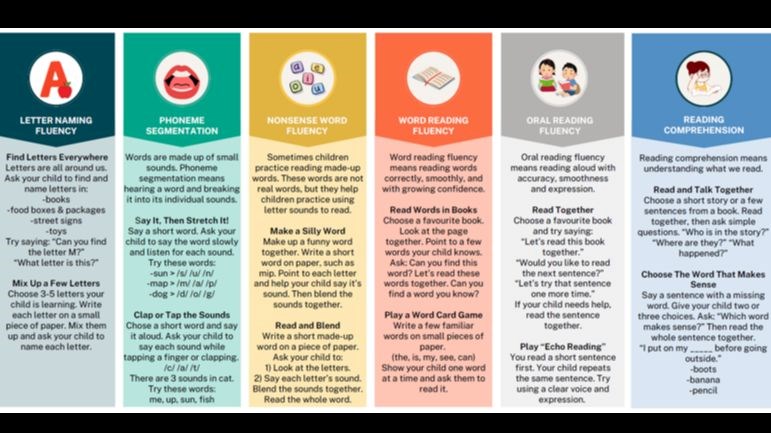
- How parents can help at home: Keep reading practice light and fun. For young readers, play simple word and sound games in the car (like asking, "What is the first sound in stop?"). Read together every day with your child, & point to words as you read. For older readers, ask what they’re reading and what they remember about the story (comprehension questions).

Please provide your question and email address in the fields below.
Your question has been successfully submitted.
CloseThank you.